When the Boats Come Out
When the Boats Come Out
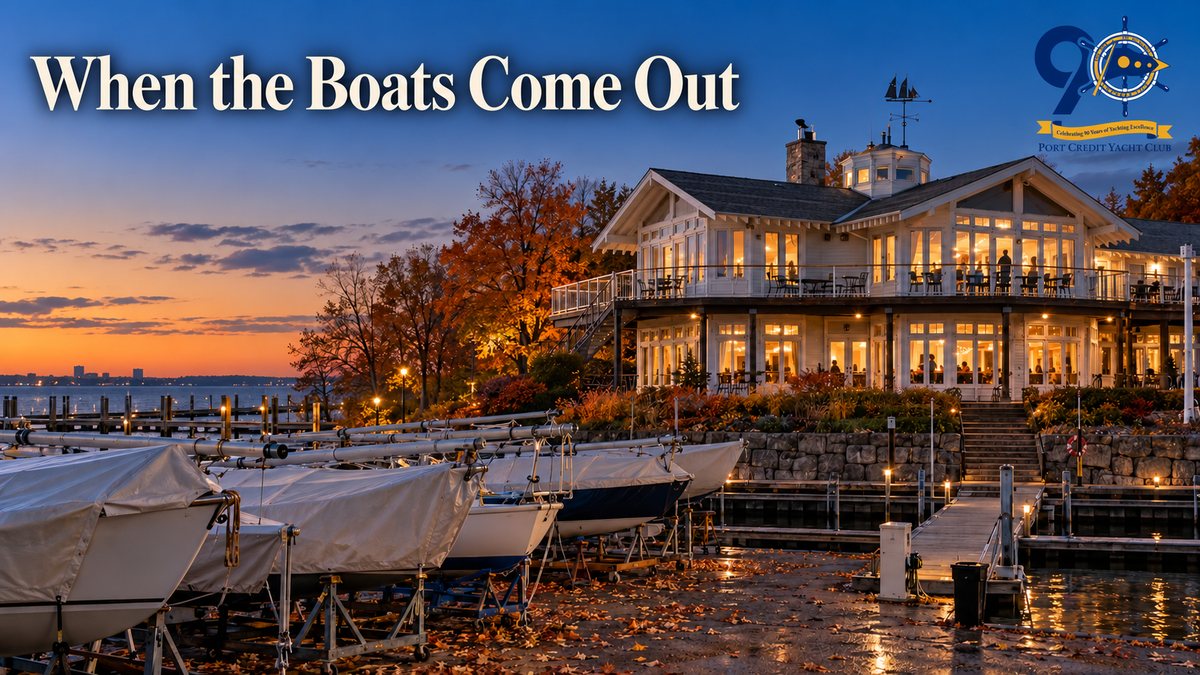
Our yard is doing two things at once this week. The J/24 North American Championship is being sailed off our shore through Sunday, and the organisers told competitors from the outset that we would be in haul-out while they raced. Boats that trailered in from across the continent are parked in a yard that is also filling up with cradles.
Once the visitors hitch up and drive home, the rest of the season comes out of the water in earnest. By the middle of November a good number of our boats will be standing in rows under white plastic, the docks will be empty, and the harbour will have taken on the particular stillness of a place that has been put away for the year.
Which brings up the question we get asked every October, usually by somebody looking at the membership page. What exactly am I paying for between November and May?
What Haul-Out Takes
Most members only see this part in passing. Harbour Staff, led by Harbourmaster Mike Simec, run hundreds of launches and haul-outs a year and then store the entire fleet through the winter. Masts come down by appointment at the mast crane, which Harbour staff alone operate, and each one gets timed around wind, weather and a queue of boats waiting a turn. There are hundreds of floating docks to keep in order as well, every one carrying its own water and power pedestal, all of it rising and falling with the lake.
The lift doing the heavy work is worth knowing about. This season we replaced a 30-ton diesel machine with a 40-ton fully electric one, designed and built by Kropf Industrial and the first of its kind in Canada. It lifts faster, it eliminates diesel emissions and spill risk in the yard, and it has made the mornings remarkably quiet.
The Clubhouse Gets Busier, Rather Than Quieter
The building fills up as the water empties. The Navigators Social Club runs year-round and welcomes boaters and non-boaters alike. That matters more than it sounds. A yacht club that speaks only to people who own boats has quietly written off half its own membership, and our social membership exists precisely so that newer and entry-level boaters can test the waters before committing to anything larger.
Through the colder months the clubhouse keeps a monthly rhythm of euchre and trivia nights, with wine and whiskey tastings and theme evenings built around food and music. Family events run right through the year too, arranged so that parents, children and grandparents can all be in the same room at once. Anyone who has tried to find somewhere that genuinely works for three generations will know how rare that is.
The tastings earn their place. An evening like that in January is about the lowest social bar a new member ever has to clear. You turn up, you sit down, somebody pours you something and tells you about it, and an hour later you have met four people. For anyone finding a way into an established club, that hour is worth a season of polite nods across the parking lot.
SEE WHAT HAPPENS OFF THE WATER
The Navigators, family events, theme nights and the cruising fleet's winter programme. pcyc.net/community-life
The Cruising Fleet Carries On Ashore
Our cruising group runs its programme all year, and it is the part of this we are fondest of. Through the summer that means organised cruises around Lake Ontario with shared meals on the dock. Through the winter it carries on as land cruises, which is exactly what it sounds like: the same fleet, the same people, an evening at the theatre or an afternoon on an indoor pickleball court standing in for a sheltered bay and an anchor.
The people who rafted up together in July spend February doing something entirely different and stay in the habit of each other's company. It sounds like a small thing, and it explains a great deal about how a club holds together across decades rather than coming apart every autumn. The boats are seasonal. The friendships that grow around them need feeding all the way through.
Winter Is When Next Season Gets Built
Underneath the social calendar sits a practical layer that most people miss, because winter is when next summer quietly gets arranged. Skippers settle who is crewing for them. The race committee lays out the calendar. Volunteers are found for July's regattas, which take a great many of them. Courses are booked. A club in February is a club doing next year's homework, and the people in the room are generally the ones whose summer is already sorted by April.
That turns the original question around. A membership between November and May buys a clubhouse, a social calendar and a set of friendships. It also buys a head start on the season everybody else is still waiting for.
THE CLUBHOUSE ITSELF
The pool, the patio and the Chartroom, and what the building offers once the boats are ashore. pcyc.net/pool-patio-chartroom
The Year Opens With a Ball
There is a shape to the year. The sailing season ends with the boats coming out, and the Club year opens with the Commodore's Ball.
The Ball is a formal dinner-dance hosted by the Commodore, and we count it among the first official social events of the year. It is also where the Commodore's Award for Outstanding Contribution is presented. Any member may put forward up to five nominations, each carrying a written case of two hundred words or less, and on the night the Commodore presents the efforts of every nominee so the whole room can acknowledge them before the award itself is given. Sitting Board members are set aside from eligibility, which keeps the thing pointed squarely at the volunteers.
The list of past winners runs back to 2006. It is a good document to read if you want to understand how a club of this age keeps working.
NOMINATE SOMEBODY
How the Commodore's Award works and who has won it since 2006. Nominations go to the General Manager at gwilliams@pcyc.net. pcyc.net/commodores-ball
Twenty-Eight Members to Seven Hundred
PCYC was founded in 1936 by twenty-eight people, it now has more than seven hundred members, and it stays open year-round. Ninety seasons is a long time to keep a place like this going, and the winters have always done as much of that work as the summers. Commodore Lisa McKay put it well earlier this year, when the new lift arrived. “This investment reflects both where we’ve been and where we’re going,” she said. “We’re proud of our history, but equally focused on building a more sustainable and efficient future for our members.”
That is the off season in a sentence. It is the half of the year when a club decides what it intends to be.
So if you have been weighing up a membership and stalling on the arithmetic of a five-month season, come and look at the place in November rather than July. The harbour will be quiet and the clubhouse will be busy, and that contrast will tell you a great deal more about what you would be joining than any sunny afternoon in August ever could.